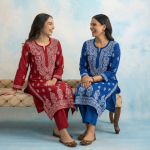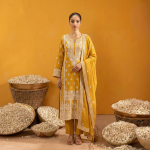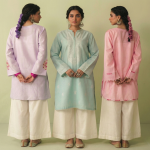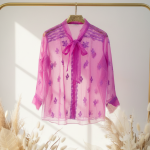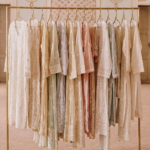

Chikankari is more than embroidery — it’s an art form born in Lucknow, crafted with patience, love, and incredible skill. But with the rising demand for Chikankari outfits, the market is now filled with machine-made replicas that may look similar at first glance but lack the soul of real craftsmanship. So, how do you identify genuine hand Chikankari from machine embroidery? Let’s help you decode it 👇
⭐ 1️⃣ Stitch Perfection vs Imperfection
One of the biggest indicators lies in the stitches themselves.
Hand Chikankari:
Handcrafted embroidery is done slowly and thoughtfully, which means you’ll notice tiny imperfections, slightly uneven patterns, and slight variations in stitch depth. These are not flaws — they are signs of authenticity and human artistry. Every piece is unique, just like the artisan’s touch behind it.
Machine Chikankari:
Machine stitching is extremely precise and looks absolutely perfect. The design often appears too uniform, repetitive, and identical, almost like a printed pattern. Though it may look neat, it lacks the natural flow and charm of real handwork.
⭐ 2️⃣ The Back Side Test
This is one of the easiest and most reliable ways to check authenticity.
Simply flip the fabric and examine the backside 👀
Hand Work:
You’ll find loose threads, knots, and slightly messy detailing at the back because hand embroidery doesn’t come with a complete finishing seal. This rawness is proof of genuine craft.
Machine Work:
The backside looks clean, sealed, and perfectly neat, often with no loose threads visible. This indicates machine precision rather than handmade effort.
⭐ 3️⃣ Fabric Quality Matters
Authentic Chikankari is traditionally crafted on premium, breathable, and soft fabrics that support delicate needlework.
Hand Chikankari is usually seen on:
✔️ Pure Cotton – for comfort and daily elegance
✔️ Georgette & Chiffon – for flowy festive looks
✔️ Muslin & Mulmul – for heritage richness
✔️ Chanderi & Silk Blends – for luxurious finish and wedding wear
Machine Chikankari is often done on cheaper synthetic fabrics, which may feel heavy, stiff, or uncomfortable.
⭐ 4️⃣ Detailing, Texture & Feel
Run your fingers gently over the embroidery.
Hand Embroidery:
It feels soft, raised, airy, and artistic, with visible depth in the stitches. You can literally feel the texture and creativity.
Machine Embroidery:
It usually feels flat, stiff, and sometimes rough, lacking that graceful handmade softness.
👉 Why Choose Original Chikankari?
Because authentic Chikankari is not just clothing — it’s culture, heritage, and emotion stitched together. Choosing real Chikankari means:
✨ Supporting skilled artisans and their livelihood
✨ Preserving centuries-old heritage craftsmanship
✨ Owning a premium piece that lasts longer
✨ Wearing something truly elegant and unique
And that’s exactly what Taagbaan stands for — authenticity, tradition, and timeless beauty. 💖